Completed Projects
- The Kibble-Zurek mechanism in weakly first-order phase transitions
- Duration: 3/2023 - 12/2025
Project Number: CNLS fellowship, LDRD 20220546CR-NLS | 20250614CR-NLS
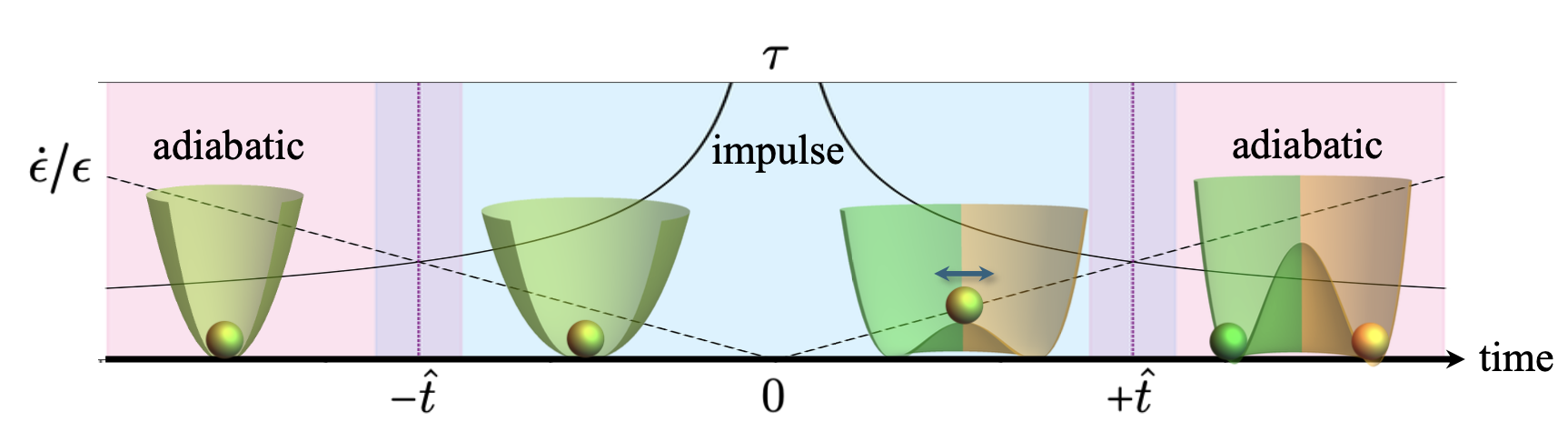
- The Kibble–Zurek mechanism successfully predicts the number of topological defects formed during second-order phase transitions and has been applied across a wide range of fields, including cosmology, condensed-matter physics, and quantum computing. However, in certain systems, weakly first-order phase transitions can arise due to the Halperin–Lubensky–Ma effect or the Coleman–Weinberg mechanism. In this study, we explore how the Kibble–Zurek framework can be extended to describe weakly first-order phase transitions.
- Selected publications:
F. Suzuki, W. H. Zurek, Phys. Rev. Lett. 132, 241601 (2024).
V. G. Sadhasivam, F. Suzuki, B. Yan, N. A. Sinitsyn, Nat. Commun. 15, 10246 (2024).
F. Suzuki, W. H. Zurek, Proc. Natl. Acad. Sci. 122 (48) e2523903122 (2025).


- Quantum mechanics of complex systems
- Duration: 2/2020 - 2/2022
Project Number: IST fellowship, Marie Sklodowska-Curie Grant No. 754411

- Although the quantum mechanics of a single particle is well understood, complex quantum systems, such as composite particles, exhibit richer behavior. The interplay between center-of-mass dynamics and internal states, together with entanglement, interactions, and decoherence, gives rise to phenomena that cannot be reduced to the properties of individual constituents. In this project, we explore how this interplay modifies quantum behavior—from condensed-matter questions, such as how internal structure influences Anderson localization, to quantum-foundations questions, such as how an internal quantum clock can be used to measure tunneling times.
- Selected publications:
F. Suzuki, W. G. Unruh, Phys. Rev. A 107, 042216 (2023).
F. Suzuki, M. Lemeshko, W. H. Zurek, R. V. Krems, Phys. Rev. Lett. 127, 160602 (2021).

- Chiral Casimir-Polder forces
- Duration: 10/2018 - 3/2019
Project Number: DAAD Research Grant
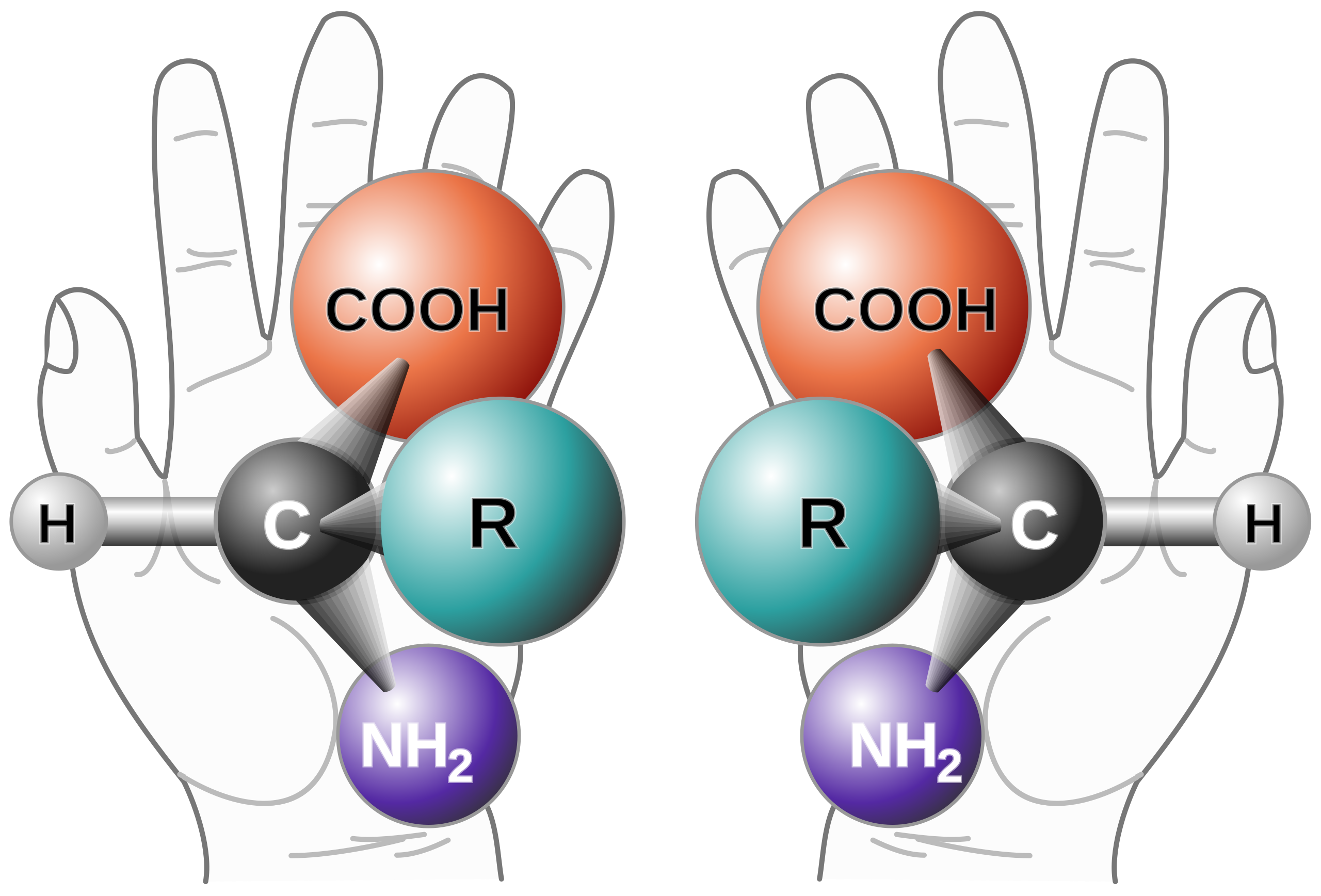
- While Casimir effects and Casimir–Polder forces are generally known to be attractive, recent theoretical studies suggest that chiral contributions to these forces can arise when interacting bodies possess chirality, such as in chiral metamaterials or chiral molecules. These chiral components may lead to chirality dependent Casimir-Polder forces or repulsive Casimir effects. In this project, we aim to theoretically characterize and experimentally explore the conditions under which such chiral Casimir and Casimir–Polder effects can be observed.
- Selected publications:
F. Suzuki, T. Momose, S. Y. Buhmann, Phys. Rev. A 99, 012513 (2019).
F. Suzuki, S. A. Shah, D. A. R. Dalvit, M. Arndt,
Phys. Rev. Research 6, 023145 (2024). (follow-on)